Why Play Isn’t Just Fun – It’s Neurological Medicine
When we think of play, we often picture giggles, games, and free-flowing imagination. But beneath the surface, something extraordinary is happening in a child’s brain and body.
Play is one of the most powerful tools for regulating the nervous system, building emotional resilience, and rewiring the brain for safety. And in today’s overstimulated, anxiety-prone world, play has never been more vital.
As a neuroscience coach who specialises in helping anxious children feel safe and regulated, I often say:
The nervous system doesn’t speak in words; it speaks in sensations, movement, and connection. That’s why play is its native language.
Understanding the Nervous System Through a Child’s Eyes
The nervous system is constantly scanning the environment for cues of safety or danger, a process called neuroception, coined by Dr. Stephen Porges in his Polyvagal Theory. For many children, especially those highly sensitive or prone to anxiety, everyday moments can be misread as threats: a loud voice, a frown, being excluded at school.
When the nervous system perceives danger, it can shift into fight, flight, or freeze, leading to meltdowns, shutdowns, aggression, or avoidance.
However, here’s the good news: the ventral vagus nerve, a part of our social engagement system, can be activated through safe, co-regulated, imaginative play, helping to bring the child back into a state of calm, curiosity, and connection.
How Play Regulates the Nervous System
Play isn’t just a “break” from learning; it is the learning. And more than that, it’s regulation in action. Here’s how:
Movement Releases Stress
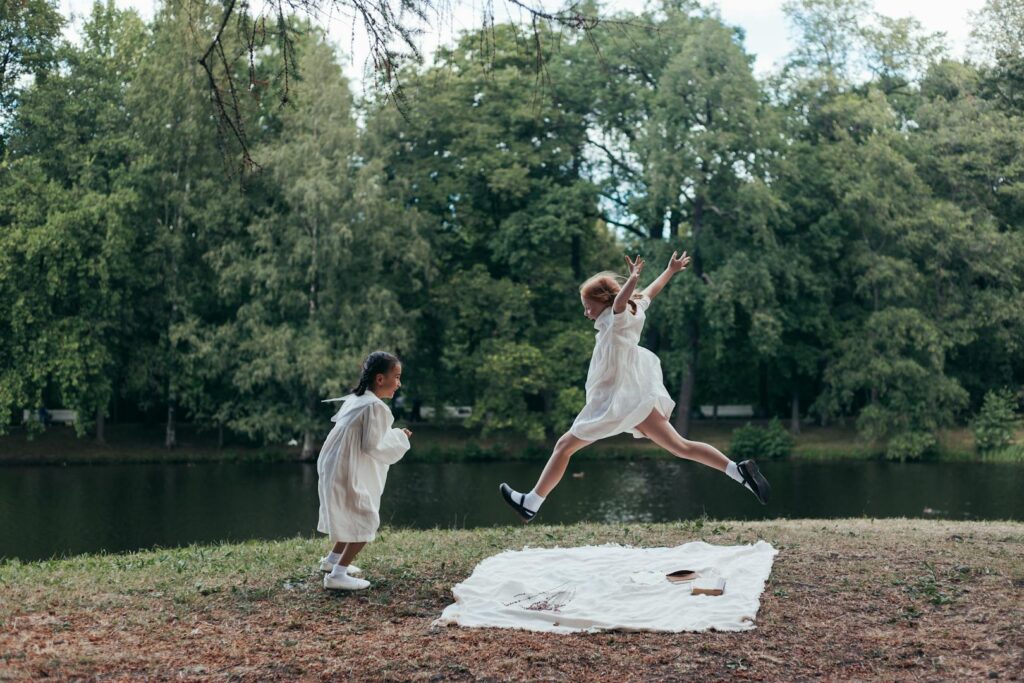
Play often involves movement, running, dancing, climbing, or building, which activates the body’s natural stress-release systems. Movement helps complete stress cycles that would otherwise stay stuck, keeping the child in a dysregulated state
Imagination Creates Neural Flexibility
When children engage in imaginative play, pretending to be superheroes, animals, or explorers, they are building new neural pathways, developing flexible thinking, and rehearsing emotional scenarios in a safe, low-stakes environment. Imagination is where the brain experiments with safety, roles, and emotional expression.
Play Builds Co-regulation and Connection
When adults or peers join in play with attuned presence, the child’s nervous system receives the ultimate message: I am seen, safe, and connected. This co-regulation builds a strong internal template for future self-regulation.
Sensory Play Calms the Brain
Play that engages the senses, such as sand, water, playdough, and various textures, stimulates the parasympathetic nervous system, promoting calmness and presence. These activities ground children in their bodies, especially those who are easily overwhelmed.
The Role of Play Therapy
Play Therapy is a neuroscience-backed therapeutic modality that uses the natural language of play to help children process emotions, reduce anxiety, and develop emotional intelligence. A skilled play therapist tracks a child’s emotional cues and uses toys, art, role-play, and storytelling to help the child regulate.
It’s especially effective for children who:
- Are prone to anxiety or stress
- Have difficulty expressing emotions verbally
- Have experienced trauma or big transitions
Show signs of shutdown, aggression, or clinginess
Why This Matters More Than Ever
In a world of rising childhood anxiety and disconnection, we must return to what the brain and body have always known: Play is medicine. It is where the roots of resilience are grown, where safety is re-learned, and where children reclaim their voice, their joy, and their self-worth.
At Vie&Santé, we believe in supporting the whole child, body, brain, and heart. That’s why we, as a partnership, bring you tools, education, and wellness resources that are deeply rooted in science, connection, and care.
A Gentle Reflection
The next time your child builds a fort out of every pillow in the house…
Or slips into a world of make-believe with dragons, dolls, or daring explorers…
Or paints their emotions across the walls of their imagination…
Pause.
Take a breath.
And gently ask yourself:
“What if this isn’t just play? What if this is their nervous system finding its way back to safety?”
Because more often than not, it is.
And in that moment, their wild, wonderful play is doing the deepest work of all. 💛